Thursday, December 8, 2016

Haunted by Grandmothers Past and Future

Haunting

A few months back I read American Ghost: A Family's Haunted Past in the Desert Southwest by Hannah Nordhaus.  In the book, the author goes on a quest to "find" her great-great grandmother Julia who supposedly haunts an historic hotel in Santa Fe, New Mexico (the great-grandmother's former home).  The topic seemed intriguing despite my skepticism.  We, as Americans, have a very strange relationship with the concepts of heritage, homelands, ancestry, etc.  Why do we feel the need to connect with ancestors from 150 years ago?  Why are we fascinated with the wronged Victorian woman returned to haunt the living?  Do we actually care about the ancestors themselves or do we simply crave an endorsement of our own world views?

Unfortunately, the author does little to explore these questions. The book offered some very interesting history regarding frontier New Mexico and the experience of German Jews making a life in the territories, but it also included a lot of pointless activity including at least six trips to various psychics/spiritualists, a predictably disappointing packaged ghost tour, and an unfortunate experience with a marijuana cookie. All in all, I'd give it 2.5 out of 5 stars.

Grandmothers Past

Despite the mediocre review, the book stuck with me.  Given the decades separating us from Julia's life, the author has an understandably difficult time penetrating the mysteries surrounding her deceased ancestor.  While her great-great grandfather's activities turn up regularly in the city newspapers, almost no primary documents say anything about her great-great grandmother.  The closest document the author could find was a teenage travel diary by Julia's daughter that sheds little light on the lady in question.  Without primary documents or satisfying answers from the spirits, the author concludes her book saying basically, "I know Julia is with me and that she supports me."  This was unsatisfying at best.  I came to hear about great-great Julia and after 300 pages learned only the Born, Married, Immigrated, Had Kids, Got Sick, and Died narrative.  What about her thoughts, dreams, aspirations, regrets?!

Almost immediately, I thought of my own recently deceased grandmother.  My grandma wasn't the type to smother you with kisses, bake you fresh cookies, or have a girls night with her granddaughters at the movies.  She'd borne and raised 10 kids on a meager budget, cared for my great-grandfather after he had a stroke, and spent many years caring for my patriarchal grandfather as his health slowly declined.  She wasn't a distant woman, but with 30-50 people at every family gathering I don't recall many personal moments.  As I grew up, she was mostly Mrs. P., Mother of 10 as my grandfather and all the relatives sucked up all the attention.  Shortly after my grandfather died however, I was sitting with her around the kitchen table with L and TwoEsforMee talking about this and that, and began to see my grandmother as a whole person.  She wasn't just Grandma.  We were seeing a wickedly funny little woman who'd seen a lot of life and had survived to tell the tale.  We had a lovely time and I felt a bit sheepish for not recognizing all this sooner.

Then she was diagnosed with late stage cancer and was dead a few months later.

While my grandmother isn't haunting anyone, I realized she faces the same fate as Nordhaus' great-great grandmother Julia.  I'd seen that glimpse of her, but she was rapidly receding behind the Mrs. P., Mother of 10 narrative. If I barely "knew" her, how would her great-great grandchildren know her?

Luckily L was ahead of me on this one, having collected letters, poems, and artworks created by my grandmother into one place.  Unlike Ms. Nordhaus' experience, this collection preserves my grandmother's voice. We know that her heritage, her family, and her faith were important to her because she said so.  They're her words, her brush-strokes, not just our assumptions or interpretations.  The more I think about it, the more I realize that L's work to preserve my grandmother's voice is an important feminist act.  Thanks to L, my grandmother's creations will faithfully represent her for future generations.

Grandmothers Future

A year ago, I didn't know that until the Equal Credit Opportunity Act of 1974, financial institutions could deny women credit unless they had their husbands' permission.  As I wrote at the time in disbelief:  "Our grandmothers were denied credit cards and loans unless our grandfathers gave them permission slips."

How much do we know about our grandmothers' lives?  

How much do we know about our mothers' experiences?  

Will our grandchildren know about our feminism?  

Perhaps our greatest acts as feminists will be to engage with and preserve our grandmothers', our mothers', and even our own narratives.  If your relatives are still living, include them in this radical feminist project.  Gather documents!  Collect recollections and opinions while you can!  Don't let the patriarchy tell our stories.  Your feminist decedents will thank you.

Saturday, November 12, 2016

SNL Fails Margot Robbie

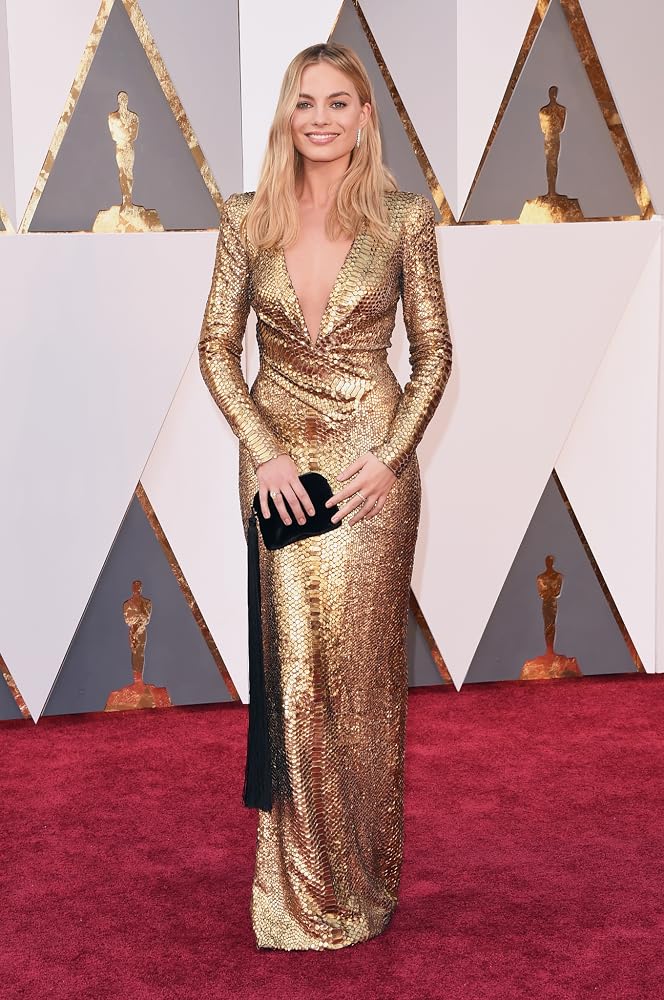
Saturday Night Live opened its 42nd season last month with Margot Robbie as their first host.  Ms. Robbie is an Australian actress known for her work in films like The Wolf of Wall Street (2013), Whisky Tango Foxtrot (2016), and, most recently, for her standout performance as Harley Quinn in an otherwise flawed Suicide Squad (2016).

Oh, and she's physically attractive.
Source
This was all the SNL writers seemed to think was relevant when pitching sketches for their season opener.  Setting aside the big election-mocking ensemble sketches, Robbie's starring moments came in two sketches I can only describe as cringe worthy.

First, we have LIVE REPORT where a local news team reports on a car-swallowing sinkhole at a local shopping center.  When the location reporter turns to interview the locals, the story quickly becomes Hot Woman with Lame Guy?!  The five-minute sketch only devolves from there.  Lame guy must be rich?  No!  He's a puppeteer!? He must be well endowed then?  No, he doesn't even have a penis!?  I'm not making this up.  Margo Robbie gets to stand there and look hot while everyone else wonders how her character could possibly have picked a man that doesn't fit society's standards.  I'm wondering how this ever made it to air.


Second, we have THE LIBRARIAN.  You can probably guess how this goes.  A student pines for the sexy librarian and his friend decides to embarrass him by drawing this fact to the librarian's attention.  She responds by launching into an increasingly disturbing erotic display, eventually turning into some kind of demon creature and literally blowing the boys' minds.  I honestly don't know what to make of this.  Maybe it was supposed to be subversive?  If so, I don't think it worked and we now have two sexy-host sketches.  They couldn't think of anything better for her to do?


These disasters look worse given the other missed opportunities throughout the show.  For example, my hopes were raised somewhat as I started on ACTRESS ROUND TABLE.  Here was a sketch with five women representing show-business role models (Keira Knightly, Marion Cotillard, Lupita Nyong'o) discussing their industry and craft.  What a great opportunity to showcase female performances in some cutting feminist satire!  Unfortunately, the sketch was mostly a vehicle for (the fabulous) Kate McKinnon to do one of her unhinged old-biddy characters.  What could have been a strong feminist sketch slowly died in a pool of dementia-based humor.  Ms. Robbie's turn as Keira Knightly barely registers.

Perhaps most damning of all is the absolutely fantastic MR. ROBOT sketch in which Leslie Jones co-opts the show's hacker protagonist to help reveal the people behind her recent nude photo hack.  The sketch is a brilliant FU to all the haters and it proves that the SNL writers can produce brilliant satire at the highest level.  Margot Robbie has an 8-second cameo.  Where was this brilliance when they were writing for her?! This was the season premiere! 

FAIL.  She deserved better.

Wednesday, November 9, 2016

Today, I am not okay. This is not okay.

Two weeks ago, I added a new name to my list of theoretical future cat names: Hillary Rodham Kitten (much to the chagrin of my pun-averse roommate). Yesterday morning, I waited an hour in the longest line I’ve ever experienced at my polling place to proudly cast my vote for Hillary Rodham Clinton to be our next President – an act that wouldn’t have been possible less than a century ago.


Hillary was never the lesser of two evils for me. She was the person that I wanted to represent my country in the world. She was the intelligent, compassionate, earnest, polished, qualified, patriotic candidate that had earned my vote – not just through the campaign over the last year-plus, but throughout her entire career in public service.

She’s fought for women and children around the world. She’s fought to bring healthcare to all Americans. She’s fought to provide Americans with the same educational opportunities, regardless of socioeconomic status, disability, gender, or race. She’s been torn down, investigated, vilified, investigated, called shrill, ugly, and lacking in stamina, investigated – you get the idea. And through it all, Hillary has refused to break. She’s refused to simply take her place silently next to her husband. She’s refused to accept that a woman shouldn’t aspire to the highest office in the land. She’s refused to give up on her country. She’s steadfastly refused to give up the fight.

Yes, Hillary has made mistakes, because she is in fact human. But more importantly, she has acknowledged and apologized for her mistakes. And then she’s learned from them. That is the mark of a good leader – not perfection, but PROGRESS.

Yesterday, I was hopeful for our future. Yesterday, I was excited to elect the first woman President of the United States. Yesterday, I was proud of my country.

Today, I’m not okay. This is not okay.

Tuesday, October 25, 2016

Small Acts of Social Media Feminism

Act 1: Anger

I'd never thought of anger as a feminist topic, but as the Guilty Feminist co-hosts and their guest discussed their experiences being angry while female (Episode 14, see my previous post), I understood.  It was impossible to listen to Deborah Francis-White's moving monologue expressing her anger following the Brexit vote without being inspired to execute my own feminist anger proclamation.

After spending weeks fuming about the misogyny erupting everywhere in response to the new Ghostbusters movie, I decided to go there and make a public statement about my anger.  I almost qualified my Facebook post to say I was "sad" or "disappointed," but no.  I was angry and I said so:


Act 2: The Mansplainer

A few weeks later, the ladies over at The Guilty Feminist were discussing Speech (Episode 18).  Their experiences with mansplaining and society's complete disregard for female perspectives was damning.  That episode was quickly followed by their Internet episode (Episode 19) in which Deborah Francis-White politely but firmly engaged with an online troll.

Then this little gem popped into my Facebook feed:


Witnessing this display of male privilege, motivated by my latent Ghostbusters anger, and inspired by the ladies at The Guilty Feminist, I felt compelled to challenge his statement with some speech of my own (politely of course).   I went with an innocuous question expressing concern, to which he responded:


As you can see, I thought his argument was absurd and I politely made my perspective clear.  While he didn't respond, his fiancee later commented:


Female speech accomplished!


Act 3: Victory

Undeterred by my compelling feats of social media feminism, the entitled mansplainer struck again a few days later:


This made me so angry.  What did she ever do to him?  Act in a popular TV show that wasn't made for him?!  I had to say something but couldn't find the right angle.  Eventually I remembered a great article by the blog FiveThirtyEight demonstrating that while women don't generally write negative reviews for media aimed at men (Sportscenter, Halo: Nightfall), many men seem compelled to write negative reviews for media aimed at women (Sex and the City, anything on the CW).  The title says it all so I thought I'd share:


I was so proud of myself I was practically prancing around the house in all my feminist glory.  Then he wrote back and I sorta panicked.  When I finally summoned the courage to read his reply, I saw:


VICTORY!!!!!!

Tuesday, October 18, 2016

Podcasts We Love: The Guilty Feminist

I'm a feminist, but --- when TwoEsforMee recommended The Guilty Feminist podcast in April, and then again in July, it wasn't until she bugged me a third time two weeks later that I actually listened to an episode.

We are inundated with media recommendations.  Friends share things on social media.  Family members gush about their latest podcast find.  Everything we read and listen to comes with promos for more things to read and listen to.  How many times have I heard those lame promos for podcasts where Two Funny Ladies Talk About Lady Stuff!?

Okay, so perhaps I shouldn't be so embarrassed about blowing off TwoEsforMee's recommendation.  All that matters is that after listening to one episode of The Guilty Feminist, I binge-listened to all the available episodes without taking a break.

Why should you listen too?  Why isn't this just another version of Two Funny Ladies Talking About Lady Stuff!?  Let me persuade you.

They have a mission

Podcasts often have goals or themes, but The Guilty Feminist and its creators -- comedians Sofie Hagen and Deborah Frances-White -- have a mission. They want to crush the patriarchy.  Yes, we're all here to laugh and have a good time, but we're also fed up with patriarchy and are ready to do something about it.  You won't find a declaration of war on the website, but the creators' fundamental desire for change gives their material focus and a compelling sense of purpose.  


They're accessible

Everything I said about crushing the patriarchy is true, but the casual listener might not notice right away.   Both Sofie Hagen and Deborah Frances-White are professional comedians who are good at their jobs.  They approach patriarchy-crushing with smart, knowing humor without descending into the goofiness that often comes with Two Funny Ladies Talking About Lady Stuff!  They're mad as hell but recognize that real-world patriarchy-crushing gets messy and absurd.  We have to laugh sometimes and this laughter provides an entry point for many people who don't realize we're laughing to avoid crying.

They have a winning formula

Unstructured conversations can be great for exploration and unwinding but they aren't the most effective tool for crushing the patriarchy.  The Guilty Feminist stays effective using a 5-segment episode format that leaves the listener entertained, challenged, moved, educated, and inspired.

Segment 1: The co-hosts open their live-shows with several "I'm a feminist, but" confessions.  The opening lines of this blog post demonstrate the approach.  Another personal example might be: I'm a feminist, but --- when I go for runs, I always pick up the pace to impress men mowing their lawns.  These amusing little confessions establish a safe space for listeners while also demonstrating patriarchy's insidiousness.

Segment 2: Next, the co-hosts each perform a brief stand-up set on the week's theme.  In the Shoes episode for example (episode 20), Deborah Frances-White delivers a cunning take down of our society's assumption that half the population should conduct their lives on stilts.  The ladies are in their element during these segments and offer incisive social commentary alongside the laughs.

Segment 3: Between the show's bi-weekly live taping events, the hosts each attempt a personal challenge related to the episode's theme.  In the Boobs episode for example (episode 13), Sofie Hagen went grocery shopping without a bra and Deborah Frances-White walked around for a day wearing 6 padded bras to exaggerate her busty-ness.  Other challenges have ranged from taking on online trolls to making unapologetic phone calls asking to form creative partnerships.  Back at the show, the ladies recap their successes, failures, insights, and lessons for the future.  These discussions provide a very personal and practical view on feminism and offer inspiration for others looking to explore feminism or promote it in their own lives.

Segment 4: Following the challenge discussions, the hosts bring on a special quest to provide additional perspective on the day's topic.  My favorites include: Episode 19's (Internet) moving discussion with Emma Holton, an online human rights activist, victim of non-consensual pornography, and leader of the Consent project; Episode 6's (Exercise) inspiring discussion with Jessamyn Stanley, a plus-size yoga instructor and body positive activist; and Episode 12's (Worth) shocking discussion with comedian Sarah Millican regarding a horrifyingly sexist TV review that tied her value as a person to her appearance, relationship status, and family status.

Segment 5: Finally, the hosts usually close the show with a few audience questions.  These audience interactions add extra voices to the mix and often provide new connections to daily realities and sources of inspiration.

They get you engaged with your personal feminism

While I would surely enjoy a podcast that discussed the nuances of feminist theory, The Guilty Feminist's innovation is to recognize the practical difficulties that come with feminist principles and to provide a comfortable space to discuss these difficulties and find renewed inspiration.  With the podcast's personal confessions, social commentary, feminist challenges, guest perspectives, and community engagement, its difficult not to find new perspectives or little projects to try.  Whether you pursue a goal unapologetically, start to appreciate your body in new way, or simply start recognizing all those "I'm a feminist, but" moments, you will leave the podcast a more active, engaged, and entertained feminist.

Join the guilty but active revolution today!  

Tuesday, October 11, 2016

A Seminal Moment

Many words have been spilled in the wake of "pussygate" and  I will not speak about Mr. Trump and his comments here.  The idea that anyone was surprised by the "revelations" seems absurd to me.  Instead I want to meditate on why this feels like an unprecedented, seminal moment for U.S. women: we are finally seeing our "respectable" male leaders for the privileged, patriarchal shams they really are.

American women just witnessed many of their respected elected officials insisting that Trump's comments weren't a big deal and/or that the behavior he bragged about doesn't constitute sexual assault.  Such views, uttered by public figures, are horrifying, not just for their content but also for their audacity.  To pronounce them repeatedly and without shame is to demonstrate just how little our leaders understand the female experience and their utter disinterest in learning more.  The privilege is staggering and unmistakable.

But I think the men disavowing Trump have shown their true nature in a way we haven't seen since the Civil Rights era.  Once sentence in particular reveals a devastating truth:
As the backlash increases over a recording of Donald J. Trump speaking of women in vulgar sexual terms, some have said the fury may be particularly intense because Mr. Trump, who has previously offended a number of minorities, is now being perceived as demeaning a target historically more valued in American society: white women. -Yamiche AlcindorLevel of Outrage Over Donald Trump Tape Is Linked to Another Issue: Race October 9, 2016. NYTimes 
This sentence is so damning.  Not only does it highlight how our leaders did nothing while so many other groups were humiliated, but it reveals their shallow motivations.

I am reminded of events back during the Republican primaries when Ted Cruz supporters circulated an unflattering meme featuring a nude photo of Melania Trump and Trump supporters responded by circulating an unflattering meme featuring a photo of Heidi Cruz.  Both men went into indignant huffs that left me strangely unsatisfied.  I couldn't quite figure out why.

Now I see it very clearly.

Cruz and Trump weren't indignant because they understood their wives's pain as the public equated their worth with their physical appearances.  No, it wasn't about the women's experiences.  It was about each man crushing a perceived threat to his manhood.  Two public primates claiming to represent the American people performed dueling dominance displays as they trespassed on each other's breeding territories.

This past weekend, many high-profile males suddenly recognized how the large aggressive male might trespass on their females (!).  How many referenced their wives, daughters, sisters, and mothers without indicating in any way that they understood the female experience?  Which of them expressed a new understanding of or appreciation for women's fears and aspirations?  The silence on this point is deafening and we hear it.  We are left without any doubt that the men we've trusted to represent us are only interested in preserving their own dominance.

How dare they?!  Oh yeah . . . male privilege.

We see it now and we will not let it stand.

And, if we don't laugh we'll cry.  Here's South Park demonstrating this dynamic better than I possibly could: Going Ape for Bebe (start around 0:48).

Sunday, August 7, 2016

Ladies I Love: Caitlin Doughty

The feminist revolution can be daunting sometimes.  The sexism seems too systemic, the misogyny too frightening, and the infighting too viscous.  We start feeling like our contributions couldn't possibly make a difference.  To beat back this gloom, I'd like to highlight a few ladies who rock their feminism simply by finding their thing and being fantastic at it, social conventions be damned.

I start my series with Caitlin Doughty, author, educator, advocate, and professional.

Source: Order of the Good Death

Her Things

  • Reintroducing healthy death awareness into our culture.
  • Promoting family participation in the death-care process.


Being Damned Good At It

  • She authored a great book about her experience in the death care industry: Smoke Gets in Your Eyes: And Other Lessons from the Crematory. Part memoir, part history, and part social commentary, this is one of the best books I've read in a long time.
  • She produces an entertaining educational YouTube series, Ask a Mortician, answering our questions about death and the death-care industry.
  • She founded an organization focused on transforming how our society handles death: The Order of the Good Death. (Follow on social media!)
  • She is a licensed mortician (in a traditionally male-dominated field) who just opened her own funeral home in Los Angeles (Undertaking LA) offering home funerals and other services supporting family participation in the death-care process.


Why I Love Her

While I was thinking about writing this post a few months back, Ms. Doughty came out with a Death & Feminism video as part of her Ask a Mortician series.  In short, she eloquently argues that women in the death-care industry deserve to be paid fairly for providing a challenging professional service. Female funeral professionals aren't "the naturally caring sex" or "maternal vessels for your grief."  Well said madame, well said.

Thursday, July 21, 2016

Dear Male Colleague

I started writing this to a specific person after dealing with a situation I found difficult in my professional life.  But looking back on it, I think the message in this letter was bigger than just this one situation, it is something I have wanted to say to other men I've encountered, and that other people might benefit from hearing, thinking about, and connecting with.

--

Dear Male Colleague,

I meant to say this yesterday: I wanted to say thank you.  And I think I will be more eloquent in writing, rather than trying to say this all in person . . .

Thank you very much for helping me deal with this whole situation.

I was incredibly anxious about that meeting.  I actually avoided eating most of the morning because I was so nervous I felt sick.  Knowing that you supported me, and getting your advice, and also sort of having you challenge me to handle this, that I WAS capable, gave me the confidence to take control of the situation and to believe that although I probably wouldn't handle it perfectly (if that's even possible) I could figure out a way of doing it professionally and as gracefully as possible.

I honestly don't think I would have addressed it as calmly, or even at all, without your help.  More likely, I would have continued to silently and miserably simmering away until my head exploded!

I also want to point out that allowing me the space and safety to be ticked off and angry about things (and sometimes joining me in that!) was a part of this.  It greatly helped me stop myself from falling into my default female programming of trying to be conciliatory at the expense of my own needs and beliefs, and of apologizing and shouldering responsibility for things that are not my fault.  I constantly do this.  This is something that I have been trying to unlearn, but too frequently I disappoint myself and do not succeed in this.  It felt really good to finally break out of that programming, stand my ground, and stand up for myself--- and prove to myself that I could actually do those things (and the world did not end)!

Expressing my dissatisfaction and expectations, upfront, without being completely crippled by a fear of a hurricane of blowback, blame, shame and guilt, is something that is a huge difficulty for me. Setting aside the specifics of the situation, handling the meeting and having it not result in some kind of catastrophic mess really felt like a huge personal victory.  I seriously felt in some way like a new person professionally.  Like I might actually be able to be a #bosslady someday in a way I'd never imagined I could before.

I know there is a lot of talk/research/evidence/experiences etc. about how men do not support or listen to women in numerous ways, especially professionally.  But as much as I have experienced prejudice, disrespect, and harassment, I have worked with some men who have shown me another wonderful reality, and it's something that I return to when I am feeling dejected about these things: that there ARE men who not only treat the women coworkers with respect and professionalism, but who are great supporters and advocates of them as well.  You are one of those people for me.

So, thank you.  I hope others learn from your example.

Drunk Feminist History

After spilling 1,850 words in my last post lambasting Conan O'Brien for his awful sexist video game reviews, I feel obliged to highlight some surprisingly feminist entertainment to restore balance to the Dropout blog.

While we hold our feminist principles sacred, not all entertainment needs to offer sophisticated social commentary.  I love watching feminist comedy shows like Inside Amy Schumer, but sometimes I just need to turn off my brain and be entertained.  Comedy Central's Drunk History, surprisingly, fills this niche very well.

As the title suggests, Drunk History doesn't provide sophisticated, highbrow entertainment.  The show's creator gets a storyteller drunk and the storyteller then attempts to tell the audience an interesting story about a historical figure or event.  As the story unfolds, a team of actors in period costume faithfully acts out the inebriated story.  Add some low-budget special effects and some celebrity cameos and you have an entertaining (if unsophisticated) show.  [Note: The UK has its own version of this show, based on the US version for once.]

One might not expect particularly progressive or feminist themes given the show's dependence on drunkness, but I've been pleasantly surprised on two fronts.

Female Storytellers

First, the show includes a surprising number of female storytellers.  In the show's first incarnation as a Funny or Die series, 2 of the 8 storytellers (25%) were women.  This ratio stayed the same in Series 1 on Comedy Central (2013); 6 of the 24 storytellers (25%) were women.  Season 2 (2014) saw the ratio increase to 30%, with 9 of 30 storytellers being women.  Season 3 (2015) increased the representation even further to include 15 women among the 36 storytellers (42%).  At this rate, Season 4 might easily have 50% female representation among its storytellers.

Stories About Women

Second, an increasingly large minority of the stories focus on women.
[Full episodes for seasons 1-3 are available behind a paywall on Hulu.]

Funny or Die Series: 1 woman's story out of 8 total stories (13%)
Season 1: 4 women's stories out of 24 total stories (17%)
Season 2: 9 women's stories out of 33 total stories (27%) 
Season 3: 8 women's stories out of 36 total stories (22%) 
If the trend continues, we can expect roughly one in four stories in Season 4 to focus on women.

This isn't 50/50 representation, but the show does a nice job including entertaining stories, voices, and performances from women without making a big fuss about it.  It's just what they do.  If I wasn't a feminist blogger I probably wouldn't have noticed I wasn't getting 100% white male stories.  (The show also makes a point to regularly include stories highlighting minority groups.)

Ultimately, this silly show makes me wonder why more media products don't do more to present women's stories.  If a show full of drunk people can do the right thing by women and minorities and be successful, it can't be that hard. (I'm looking at you Conan.)

Wednesday, June 29, 2016

Carrie Underwood, Sing a Different Tune!

Recently, I accidentally listened to Carrie Underwood's new single, Church Bells.

I generally feel like I have a bias against Underwood. Ever since Jesus Take The Wheel, I have felt like her style just always seems a little too dramatic and heart-wrenched for me.  So when I hear a new song from her, I try to give her the benefit of the doubt--- that if I don't like her song, it's because of my unique preferences, not because it's mediocre music.  Perhaps this is why I left the radio on when Church Bells came on.

However, once again, I was left extremely unimpressed and peevish.  "Why the heck does Underwood keep singing about these violent revenge fantasies?" I wondered.

You see, the plot of Church Bells revolves around Jenny, a beautiful poor girl who marries rich, and discovers the marriage isn't working and that she's married to an abusive alcoholic.  After praying for help and listening to the church bells, Jenny poisons her husband--- and then goes on to listen to the church bells once again at hubby's funeral (unfortunately a verse where her ghost listens to church bells at her own funeral after she gets her lethal injection is missing).  This song has much in common with another Underwood hit, Blown Away.  While arguably a better song, Blown Away again tells the story of a young woman getting deadly revenge on a man (drunken father) who has abused her (death by tornado this time).

These songs tap into a tedious trope of romanticizing the abuse of women for dramatic affect.  This trope is overly and woefully familiar throughout the country genre, and art in general, and now also in the work of Carrie Underwood apparently!  As Underwood is a bright, cheery personality with a relatively happy public biography, these murderous tales always seemed like a strange subject for her to keep harping on about to me.

While I understand the cheap appeal of these stories, and the easy emotion one can tap into to create a compelling song, these just leave me with an overwhelming sense of not just their unoriginality but their inertia.  Do we really need more songs telling the sad tales of birds in gilded cages who have to resort to violence and death (whether murder or suicide, or both) to end their suffering?  Do we need to continue to romanticize the tragic downfall women commodified and beaten by men?  Can we stop waxing lyrical about drunk, violent men as if they are an inevitable fact of life, and who can only be stopped by poetic justice?  The sad consequences of drunkenness are a hugely popular subject in country music (just behind broken hearts, teenage pregnancy and well, drinking)--- perhaps we can find a new way of broaching the subject.  Haven't we been singing about these things for literally centuries?  Maybe we can find a different way for the stories to end--- murder and suicide are not the only two options here!

Do you know what song I would love to hear?  A song where Jenny gets the resources together to get a divorce and get out of a relationship she got into for all the wrong reasons.  A song where Jenny finds a local support network--- a sister, a friend, a doctor, a helpline volunteer--- who help her find a place in a shelter or file charges against her abusive husband.  A song where Jenny gets her GED and finds a rewarding job, realizing that she can be valued for more than her body and can contribute meaningfully to her community.  A song that tells women that there are other ways out of abuse and unhappiness other than violence or self-harm.  A song where Jenny's abuser goes to therapy and comes back to her years later and apologizes for his behavior.  A song that tells men that they too can get help, can break cycles of violence and sexism, and can be a part of the healing process.

There you go, Carrie Underwood, there is your next song!  There is a lot more to sing about than those sad church bells!