We've enjoyed our time on Blogger, but we are excited to announce that we have moved to WordPress!
Travel with us over to our new site: wsdropout.wordpress.com
We hope you keep reading and continue the liberating journey that is being a feminist!
Be sure sign-up to get email updates by clicking the 'Follow' button in the bottom right corner when you are the top of the home page!
Wednesday, March 1, 2017

Tuesday, February 7, 2017
Drunk Historians for the Win!
Back in July 2016, I told you about the television show Drunk History on the Comedy Central network. To recap,
With Season 4 now complete with 10 episodes exploring 28 stories, how did they do?
As if 50% more stories about women wasn't enough, the show's creators added an interesting new feature to the fourth season. As the episodes progressed, I noticed that many of the background and supporting roles were performed by the show's female cast in trouser or pants roles. For example, business man no. 2 would be a woman wearing a suit and mustache. Or Shakespearean actor no. 3 would be a woman in men's garb. At first I thought they were just short-staffed on those filming days, but it happened enough to seem intentional.
Then it happened . . . Episode 9 "Hamilton" featuring a very drunk Lin-Manuel Miranda.
The Hamilton-Burr story goes way back to the show's beginnings as a web-series, so I was a little surprised they were tackling it again. But this time you have Lin-Manuel Miranda and an entire episode devoted to the two men and their relationship. You also have both Hamilton and Burr played by women. That's right, female founding fathers. BOOM!
Did I mention that this show is hosted by drunk people? Where is the rest of the entertainment industry?! Probably hiding with embarrassment because they're so far behind the times. Would they have cast women to represent the founding fathers? I don't think so. They couldn't even imagine casting Asian-American actor John Cho as Shakespeare (episode 8). Oh, yeah, Drunk History did that too.
Drunk historians for the win!
The show's creator gets a storyteller drunk and the storyteller then attempts to tell the audience an interesting story about a historical figure or event. As the story unfolds, a team of actors in period costume faithfully acts out the inebriated story. Add some low-budget special effects and some celebrity cameos and you have an entertaining (if unsophisticated) show.What was more relevant for our purposes was the show's surprisingly progressive/feminist themes. Over the course of three seasons, the show had increased the percentage of female storytellers to 42% and the percentage of woman-centered stories to around 25%, all without making a big fuss about it. I predicted that at the current rate, Season 4 might get even closer to parity.
With Season 4 now complete with 10 episodes exploring 28 stories, how did they do?
Female Storytellers
Starting with the storytellers, I counted 17 male storytellers and 11 female storytellers across all ten episodes. This works out to about 40% female storytellers across the season, roughly equal to the representation in Season 3. No increase, but not too shabby.Stories About Women
Turning to the stories themselves, I counted 11 stories featuring a woman (or several women) in a significant way (see the list below). This amounts to about 40% of the Season 4 stories! Remember, Seasons 2 and 3 averaged only about 25% stories with a female focus. The fourth season gave us more that 50% more stories about women!!
- Ella Fitzgerald and Marylin Monroe (Episode 2)
- Carrie Nation (Episode 3)
- Marsha P. Johnson (Episode 3)
- Eleanor Roosevelt & Lyudmila Pavlichenko (Episode 4)
- Sadie the Goat and Gallus Mag (Episode 5)
- Katharine Wright (Episode 6)
- The Kopp Sisters (Episode 6)
- The Fox Sisters (Episode 6)
- Emily Roebling (Episode 7)
- Julia Child (Episode 8)
- The Cherry Sisters (Episode 10)
But, Wait! There's More!
As if 50% more stories about women wasn't enough, the show's creators added an interesting new feature to the fourth season. As the episodes progressed, I noticed that many of the background and supporting roles were performed by the show's female cast in trouser or pants roles. For example, business man no. 2 would be a woman wearing a suit and mustache. Or Shakespearean actor no. 3 would be a woman in men's garb. At first I thought they were just short-staffed on those filming days, but it happened enough to seem intentional.
Then it happened . . . Episode 9 "Hamilton" featuring a very drunk Lin-Manuel Miranda.
The Hamilton-Burr story goes way back to the show's beginnings as a web-series, so I was a little surprised they were tackling it again. But this time you have Lin-Manuel Miranda and an entire episode devoted to the two men and their relationship. You also have both Hamilton and Burr played by women. That's right, female founding fathers. BOOM!
Did I mention that this show is hosted by drunk people? Where is the rest of the entertainment industry?! Probably hiding with embarrassment because they're so far behind the times. Would they have cast women to represent the founding fathers? I don't think so. They couldn't even imagine casting Asian-American actor John Cho as Shakespeare (episode 8). Oh, yeah, Drunk History did that too.
Drunk historians for the win!
Tuesday, January 17, 2017
marching
When registering for the Women's March on Washington, it asked me why I was marching. I'm not sure if I am done with this yet but in honor of the march this weekend, here it is.
marching
I am marching
to stand up and be counted.
to not let those men
in the halls of influence
rest easy,
and sit back in comfortable armchairs
because we're coming for you.
feel the ground already shaking
the air already shimmering
with our shriek
Reminding them
that there are barbarians
at the gates.
Yes, Sheroes and rebels
and warriors.
We tell the world
a history, a future
that we don't go down quietly or forgotten
and watch our dreams go quietly
We did not loosen our grasp,
frozen, observing them
sinking below cold deep waters
burning the world, watching them
curl into ash and blow
across nothing but sooty plains.
--
I am marching
to tell the ones with all those zeros
at the ends of their names
that 1 is still 1
that 1 + 1 is still 2.
one person, one family,
one klan, one kind
or even just: one
and their sumptuousness
and their supremacy
and their sense of 'security'
are still just one
not worth more than one life
not worth any other.
In fact
I owe a debt to those trampled,
and to those who are yet to be
thrown under the wheels.
With no justice
there is no peace.
And we choose liberty over death.
And I choose liberty for them.
I'll carry any absent women
with me in my footsteps
as best I can
Because wherever two or three gather,
there am I.
For better or for worse,
til death do us part
I am this land.
Saturday, January 7, 2017
Powering Up with Intersectionality
Donald Trump has been a font of inspiration for feminist discourse ever since he first declared himself a candidate for president. New misogyny seemed to pop up every week. We thought the world had changed with "Pussygate" (see my previous post), but with his election last month, the floodgates opened. One theme kept popping up in my feeds: Intersectionality and Intersectional Feminism.

Many feminists have absorbed this lesson post-Trump. I was particularly moved by Deborah Frances-White's call to action in Part 1 of the Guilty Feminist Podcast's Emergency Post-Trump Episode. As we prepare for the Trump presidency, where does your power lie? How can intersectionality power up your engagement and activism in the new year? 2017 promises to be an transfomative year. Lets be ready!
What is Intersectionality?
First articulated in the late 1980s by black feminist scholar and race theorist Kimberlé Crenshaw, intersectionality recognizes that multiple systems of oppression can interact to marginalize people. Rather than acting independently, systems based on class, sex, race, gender & sexuality, disability, nationality, religion, etc. interact to generate complex oppression experiences. From this perspective, we can better understand a person or group's power/privilege within our society. For example, an intersectional perspective highlights how a rich, able-bodied, heterosexual, christian, natural-born, white male citizen has the most power in our society. A disabled, low-income, Muslim, immigrant, transgender woman of color, conversely, has very little power under the combined pressure of many systems of oppression operating in our society.

Powering Up
I had encountered bits of intersectional thinking before the election (the Guilty Feminist Podcast in particular, see my previous post), but it seemed to be everywhere post-election. Many white women were stunned that millions of other white women would vote by their class and/or race rather than by their sex/gender. Many non-white feminists were not surprised at all and were incensed, calling "white feminists" out for their persistent ignorance when it comes to the interesectional experiences of women of color. The resulting consciousness-raising was important, but emotions ran high and it was easy to feel defeated. Fortunately, intersectional feminism has roots in social justice activism and points the way toward improved engagement.
We can think about oppression, but the flip side of oppression is power. We "white feminists" often focus on our lack of power under patriarchy, and rightly so, but this focus misses the astounding power/privileged we often have under the other oppression systems. I, for example, am a woman and an atheist, putting me at a disadvantage under the SEX and RELIGION systems operating in the US. On the other hand, I benefit from power and privilege under the CLASS, RACE, GENDER & SEXUALITY, NATIONALITY, and DISABILITY systems. I could choose to focus on my lack of power under the patriarchy (and this is important), but I shouldn't lose sight of just how much power I have and how I can use it to further social justice missions.
 |
| My attempt to visualize my intersectional power. |
Many feminists have absorbed this lesson post-Trump. I was particularly moved by Deborah Frances-White's call to action in Part 1 of the Guilty Feminist Podcast's Emergency Post-Trump Episode. As we prepare for the Trump presidency, where does your power lie? How can intersectionality power up your engagement and activism in the new year? 2017 promises to be an transfomative year. Lets be ready!
Thursday, December 8, 2016
Haunted by Grandmothers Past and Future
Haunting
A few months back I read American Ghost: A Family's Haunted Past in the Desert Southwest by Hannah Nordhaus. In the book, the author goes on a quest to "find" her great-great grandmother Julia who supposedly haunts an historic hotel in Santa Fe, New Mexico (the great-grandmother's former home). The topic seemed intriguing despite my skepticism. We, as Americans, have a very strange relationship with the concepts of heritage, homelands, ancestry, etc. Why do we feel the need to connect with ancestors from 150 years ago? Why are we fascinated with the wronged Victorian woman returned to haunt the living? Do we actually care about the ancestors themselves or do we simply crave an endorsement of our own world views?
Unfortunately, the author does little to explore these questions. The book offered some very interesting history regarding frontier New Mexico and the experience of German Jews making a life in the territories, but it also included a lot of pointless activity including at least six trips to various psychics/spiritualists, a predictably disappointing packaged ghost tour, and an unfortunate experience with a marijuana cookie. All in all, I'd give it 2.5 out of 5 stars.
Grandmothers Past
Despite the mediocre review, the book stuck with me. Given the decades separating us from Julia's life, the author has an understandably difficult time penetrating the mysteries surrounding her deceased ancestor. While her great-great grandfather's activities turn up regularly in the city newspapers, almost no primary documents say anything about her great-great grandmother. The closest document the author could find was a teenage travel diary by Julia's daughter that sheds little light on the lady in question. Without primary documents or satisfying answers from the spirits, the author concludes her book saying basically, "I know Julia is with me and that she supports me." This was unsatisfying at best. I came to hear about great-great Julia and after 300 pages learned only the Born, Married, Immigrated, Had Kids, Got Sick, and Died narrative. What about her thoughts, dreams, aspirations, regrets?!
Almost immediately, I thought of my own recently deceased grandmother. My grandma wasn't the type to smother you with kisses, bake you fresh cookies, or have a girls night with her granddaughters at the movies. She'd borne and raised 10 kids on a meager budget, cared for my great-grandfather after he had a stroke, and spent many years caring for my patriarchal grandfather as his health slowly declined. She wasn't a distant woman, but with 30-50 people at every family gathering I don't recall many personal moments. As I grew up, she was mostly Mrs. P., Mother of 10 as my grandfather and all the relatives sucked up all the attention. Shortly after my grandfather died however, I was sitting with her around the kitchen table with L and TwoEsforMee talking about this and that, and began to see my grandmother as a whole person. She wasn't just Grandma. We were seeing a wickedly funny little woman who'd seen a lot of life and had survived to tell the tale. We had a lovely time and I felt a bit sheepish for not recognizing all this sooner.
Then she was diagnosed with late stage cancer and was dead a few months later.
While my grandmother isn't haunting anyone, I realized she faces the same fate as Nordhaus' great-great grandmother Julia. I'd seen that glimpse of her, but she was rapidly receding behind the Mrs. P., Mother of 10 narrative. If I barely "knew" her, how would her great-great grandchildren know her?
Luckily L was ahead of me on this one, having collected letters, poems, and artworks created by my grandmother into one place. Unlike Ms. Nordhaus' experience, this collection preserves my grandmother's voice. We know that her heritage, her family, and her faith were important to her because she said so. They're her words, her brush-strokes, not just our assumptions or interpretations. The more I think about it, the more I realize that L's work to preserve my grandmother's voice is an important feminist act. Thanks to L, my grandmother's creations will faithfully represent her for future generations.
Grandmothers Future
A year ago, I didn't know that until the Equal Credit Opportunity Act of 1974, financial institutions could deny women credit unless they had their husbands' permission. As I wrote at the time in disbelief: "Our grandmothers were denied credit cards and loans unless our grandfathers gave them permission slips."
How much do we know about our mothers' experiences?
Will our grandchildren know about our feminism?
Perhaps our greatest acts as feminists will be to engage with and preserve our grandmothers', our mothers', and even our own narratives. If your relatives are still living, include them in this radical feminist project. Gather documents! Collect recollections and opinions while you can! Don't let the patriarchy tell our stories. Your feminist decedents will thank you.
Saturday, November 12, 2016
SNL Fails Margot Robbie
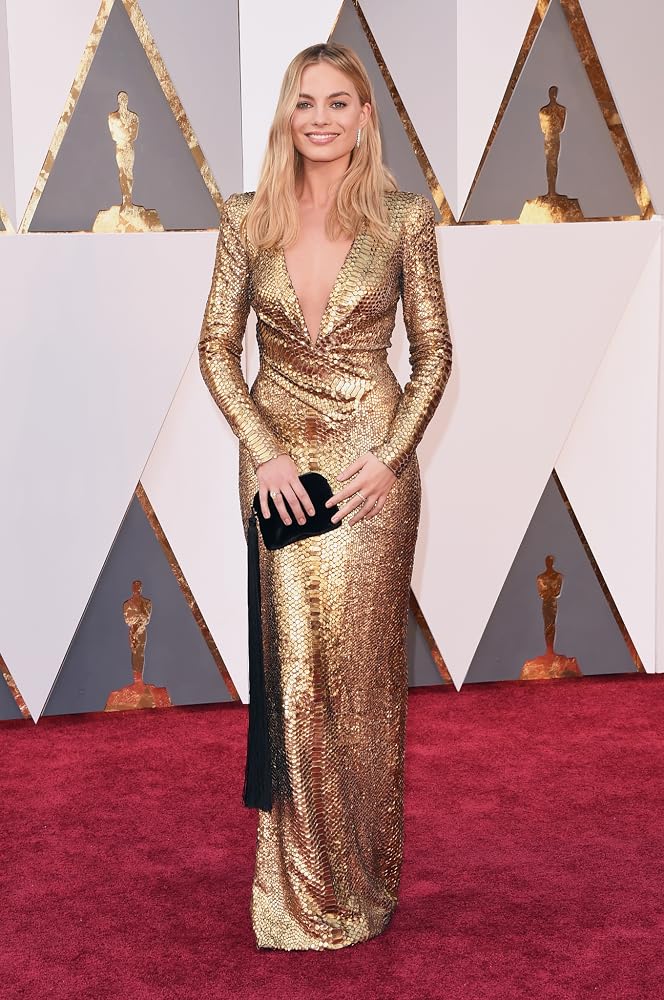
Saturday Night Live opened its 42nd season last month with Margot Robbie as their first host. Ms. Robbie is an Australian actress known for her work in films like The Wolf of Wall Street (2013), Whisky Tango Foxtrot (2016), and, most recently, for her standout performance as Harley Quinn in an otherwise flawed Suicide Squad (2016).
Oh, and she's physically attractive.
This was all the SNL writers seemed to think was relevant when pitching sketches for their season opener. Setting aside the big election-mocking ensemble sketches, Robbie's starring moments came in two sketches I can only describe as cringe worthy.
First, we have LIVE REPORT where a local news team reports on a car-swallowing sinkhole at a local shopping center. When the location reporter turns to interview the locals, the story quickly becomes Hot Woman with Lame Guy?! The five-minute sketch only devolves from there. Lame guy must be rich? No! He's a puppeteer!? He must be well endowed then? No, he doesn't even have a penis!? I'm not making this up. Margo Robbie gets to stand there and look hot while everyone else wonders how her character could possibly have picked a man that doesn't fit society's standards. I'm wondering how this ever made it to air.
Second, we have THE LIBRARIAN. You can probably guess how this goes. A student pines for the sexy librarian and his friend decides to embarrass him by drawing this fact to the librarian's attention. She responds by launching into an increasingly disturbing erotic display, eventually turning into some kind of demon creature and literally blowing the boys' minds. I honestly don't know what to make of this. Maybe it was supposed to be subversive? If so, I don't think it worked and we now have two sexy-host sketches. They couldn't think of anything better for her to do?
These disasters look worse given the other missed opportunities throughout the show. For example, my hopes were raised somewhat as I started on ACTRESS ROUND TABLE. Here was a sketch with five women representing show-business role models (Keira Knightly, Marion Cotillard, Lupita Nyong'o) discussing their industry and craft. What a great opportunity to showcase female performances in some cutting feminist satire! Unfortunately, the sketch was mostly a vehicle for (the fabulous) Kate McKinnon to do one of her unhinged old-biddy characters. What could have been a strong feminist sketch slowly died in a pool of dementia-based humor. Ms. Robbie's turn as Keira Knightly barely registers.
Perhaps most damning of all is the absolutely fantastic MR. ROBOT sketch in which Leslie Jones co-opts the show's hacker protagonist to help reveal the people behind her recent nude photo hack. The sketch is a brilliant FU to all the haters and it proves that the SNL writers can produce brilliant satire at the highest level. Margot Robbie has an 8-second cameo. Where was this brilliance when they were writing for her?! This was the season premiere!
FAIL. She deserved better.
Oh, and she's physically attractive.
 |
| Source |
First, we have LIVE REPORT where a local news team reports on a car-swallowing sinkhole at a local shopping center. When the location reporter turns to interview the locals, the story quickly becomes Hot Woman with Lame Guy?! The five-minute sketch only devolves from there. Lame guy must be rich? No! He's a puppeteer!? He must be well endowed then? No, he doesn't even have a penis!? I'm not making this up. Margo Robbie gets to stand there and look hot while everyone else wonders how her character could possibly have picked a man that doesn't fit society's standards. I'm wondering how this ever made it to air.
Second, we have THE LIBRARIAN. You can probably guess how this goes. A student pines for the sexy librarian and his friend decides to embarrass him by drawing this fact to the librarian's attention. She responds by launching into an increasingly disturbing erotic display, eventually turning into some kind of demon creature and literally blowing the boys' minds. I honestly don't know what to make of this. Maybe it was supposed to be subversive? If so, I don't think it worked and we now have two sexy-host sketches. They couldn't think of anything better for her to do?
These disasters look worse given the other missed opportunities throughout the show. For example, my hopes were raised somewhat as I started on ACTRESS ROUND TABLE. Here was a sketch with five women representing show-business role models (Keira Knightly, Marion Cotillard, Lupita Nyong'o) discussing their industry and craft. What a great opportunity to showcase female performances in some cutting feminist satire! Unfortunately, the sketch was mostly a vehicle for (the fabulous) Kate McKinnon to do one of her unhinged old-biddy characters. What could have been a strong feminist sketch slowly died in a pool of dementia-based humor. Ms. Robbie's turn as Keira Knightly barely registers.
Perhaps most damning of all is the absolutely fantastic MR. ROBOT sketch in which Leslie Jones co-opts the show's hacker protagonist to help reveal the people behind her recent nude photo hack. The sketch is a brilliant FU to all the haters and it proves that the SNL writers can produce brilliant satire at the highest level. Margot Robbie has an 8-second cameo. Where was this brilliance when they were writing for her?! This was the season premiere!
FAIL. She deserved better.
Wednesday, November 9, 2016
Today, I am not okay. This is not okay.
Two weeks ago, I added a new name to my list of theoretical future cat names: Hillary Rodham Kitten (much to the chagrin of my pun-averse roommate). Yesterday morning, I waited an hour in the longest line I’ve ever experienced at my polling place to proudly cast my vote for Hillary Rodham Clinton to be our next President – an act that wouldn’t have been possible less than a century ago.

Hillary was never the lesser of two evils for me. She was the person that I wanted to represent my country in the world. She was the intelligent, compassionate, earnest, polished, qualified, patriotic candidate that had earned my vote – not just through the campaign over the last year-plus, but throughout her entire career in public service.
She’s fought for women and children around the world. She’s fought to bring healthcare to all Americans. She’s fought to provide Americans with the same educational opportunities, regardless of socioeconomic status, disability, gender, or race. She’s been torn down, investigated, vilified, investigated, called shrill, ugly, and lacking in stamina, investigated – you get the idea. And through it all, Hillary has refused to break. She’s refused to simply take her place silently next to her husband. She’s refused to accept that a woman shouldn’t aspire to the highest office in the land. She’s refused to give up on her country. She’s steadfastly refused to give up the fight.
Yes, Hillary has made mistakes, because she is in fact human. But more importantly, she has acknowledged and apologized for her mistakes. And then she’s learned from them. That is the mark of a good leader – not perfection, but PROGRESS.
Yesterday, I was hopeful for our future. Yesterday, I was excited to elect the first woman President of the United States. Yesterday, I was proud of my country.
Today, I’m not okay. This is not okay.

Hillary was never the lesser of two evils for me. She was the person that I wanted to represent my country in the world. She was the intelligent, compassionate, earnest, polished, qualified, patriotic candidate that had earned my vote – not just through the campaign over the last year-plus, but throughout her entire career in public service.
She’s fought for women and children around the world. She’s fought to bring healthcare to all Americans. She’s fought to provide Americans with the same educational opportunities, regardless of socioeconomic status, disability, gender, or race. She’s been torn down, investigated, vilified, investigated, called shrill, ugly, and lacking in stamina, investigated – you get the idea. And through it all, Hillary has refused to break. She’s refused to simply take her place silently next to her husband. She’s refused to accept that a woman shouldn’t aspire to the highest office in the land. She’s refused to give up on her country. She’s steadfastly refused to give up the fight.
Yes, Hillary has made mistakes, because she is in fact human. But more importantly, she has acknowledged and apologized for her mistakes. And then she’s learned from them. That is the mark of a good leader – not perfection, but PROGRESS.
Yesterday, I was hopeful for our future. Yesterday, I was excited to elect the first woman President of the United States. Yesterday, I was proud of my country.
Today, I’m not okay. This is not okay.
Tuesday, October 25, 2016
Small Acts of Social Media Feminism
Act 1: Anger
I'd never thought of anger as a feminist topic, but as the Guilty Feminist co-hosts and their guest discussed their experiences being angry while female (Episode 14, see my previous post), I understood. It was impossible to listen to Deborah Francis-White's moving monologue expressing her anger following the Brexit vote without being inspired to execute my own feminist anger proclamation.After spending weeks fuming about the misogyny erupting everywhere in response to the new Ghostbusters movie, I decided to go there and make a public statement about my anger. I almost qualified my Facebook post to say I was "sad" or "disappointed," but no. I was angry and I said so:

Act 2: The Mansplainer
A few weeks later, the ladies over at The Guilty Feminist were discussing Speech (Episode 18). Their experiences with mansplaining and society's complete disregard for female perspectives was damning. That episode was quickly followed by their Internet episode (Episode 19) in which Deborah Francis-White politely but firmly engaged with an online troll.Then this little gem popped into my Facebook feed:

Witnessing this display of male privilege, motivated by my latent Ghostbusters anger, and inspired by the ladies at The Guilty Feminist, I felt compelled to challenge his statement with some speech of my own (politely of course). I went with an innocuous question expressing concern, to which he responded:

As you can see, I thought his argument was absurd and I politely made my perspective clear. While he didn't respond, his fiancee later commented:

Female speech accomplished!
Act 3: Victory
Undeterred by my compelling feats of social media feminism, the entitled mansplainer struck again a few days later:
This made me so angry. What did she ever do to him? Act in a popular TV show that wasn't made for him?! I had to say something but couldn't find the right angle. Eventually I remembered a great article by the blog FiveThirtyEight demonstrating that while women don't generally write negative reviews for media aimed at men (Sportscenter, Halo: Nightfall), many men seem compelled to write negative reviews for media aimed at women (Sex and the City, anything on the CW). The title says it all so I thought I'd share:

I was so proud of myself I was practically prancing around the house in all my feminist glory. Then he wrote back and I sorta panicked. When I finally summoned the courage to read his reply, I saw:

VICTORY!!!!!!
Tuesday, October 18, 2016
Podcasts We Love: The Guilty Feminist
I'm a feminist, but --- when TwoEsforMee recommended The Guilty Feminist podcast in April, and then again in July, it wasn't until she bugged me a third time two weeks later that I actually listened to an episode.
We are inundated with media recommendations. Friends share things on social media. Family members gush about their latest podcast find. Everything we read and listen to comes with promos for more things to read and listen to. How many times have I heard those lame promos for podcasts where Two Funny Ladies Talk About Lady Stuff!?
Okay, so perhaps I shouldn't be so embarrassed about blowing off TwoEsforMee's recommendation. All that matters is that after listening to one episode of The Guilty Feminist, I binge-listened to all the available episodes without taking a break.
Why should you listen too? Why isn't this just another version of Two Funny Ladies Talking About Lady Stuff!? Let me persuade you.
They have a mission
Podcasts often have goals or themes, but The Guilty Feminist and its creators -- comedians Sofie Hagen and Deborah Frances-White -- have a mission. They want to crush the patriarchy. Yes, we're all here to laugh and have a good time, but we're also fed up with patriarchy and are ready to do something about it. You won't find a declaration of war on the website, but the creators' fundamental desire for change gives their material focus and a compelling sense of purpose.They're accessible
Everything I said about crushing the patriarchy is true, but the casual listener might not notice right away. Both Sofie Hagen and Deborah Frances-White are professional comedians who are good at their jobs. They approach patriarchy-crushing with smart, knowing humor without descending into the goofiness that often comes with Two Funny Ladies Talking About Lady Stuff! They're mad as hell but recognize that real-world patriarchy-crushing gets messy and absurd. We have to laugh sometimes and this laughter provides an entry point for many people who don't realize we're laughing to avoid crying.They have a winning formula
Unstructured conversations can be great for exploration and unwinding but they aren't the most effective tool for crushing the patriarchy. The Guilty Feminist stays effective using a 5-segment episode format that leaves the listener entertained, challenged, moved, educated, and inspired.Segment 1: The co-hosts open their live-shows with several "I'm a feminist, but" confessions. The opening lines of this blog post demonstrate the approach. Another personal example might be: I'm a feminist, but --- when I go for runs, I always pick up the pace to impress men mowing their lawns. These amusing little confessions establish a safe space for listeners while also demonstrating patriarchy's insidiousness.
Segment 2: Next, the co-hosts each perform a brief stand-up set on the week's theme. In the Shoes episode for example (episode 20), Deborah Frances-White delivers a cunning take down of our society's assumption that half the population should conduct their lives on stilts. The ladies are in their element during these segments and offer incisive social commentary alongside the laughs.
Segment 3: Between the show's bi-weekly live taping events, the hosts each attempt a personal challenge related to the episode's theme. In the Boobs episode for example (episode 13), Sofie Hagen went grocery shopping without a bra and Deborah Frances-White walked around for a day wearing 6 padded bras to exaggerate her busty-ness. Other challenges have ranged from taking on online trolls to making unapologetic phone calls asking to form creative partnerships. Back at the show, the ladies recap their successes, failures, insights, and lessons for the future. These discussions provide a very personal and practical view on feminism and offer inspiration for others looking to explore feminism or promote it in their own lives.
Segment 4: Following the challenge discussions, the hosts bring on a special quest to provide additional perspective on the day's topic. My favorites include: Episode 19's (Internet) moving discussion with Emma Holton, an online human rights activist, victim of non-consensual pornography, and leader of the Consent project; Episode 6's (Exercise) inspiring discussion with Jessamyn Stanley, a plus-size yoga instructor and body positive activist; and Episode 12's (Worth) shocking discussion with comedian Sarah Millican regarding a horrifyingly sexist TV review that tied her value as a person to her appearance, relationship status, and family status.
Segment 5: Finally, the hosts usually close the show with a few audience questions. These audience interactions add extra voices to the mix and often provide new connections to daily realities and sources of inspiration.
They get you engaged with your personal feminism
While I would surely enjoy a podcast that discussed the nuances of feminist theory, The Guilty Feminist's innovation is to recognize the practical difficulties that come with feminist principles and to provide a comfortable space to discuss these difficulties and find renewed inspiration. With the podcast's personal confessions, social commentary, feminist challenges, guest perspectives, and community engagement, its difficult not to find new perspectives or little projects to try. Whether you pursue a goal unapologetically, start to appreciate your body in new way, or simply start recognizing all those "I'm a feminist, but" moments, you will leave the podcast a more active, engaged, and entertained feminist.Join the guilty but active revolution today!
Tuesday, October 11, 2016
A Seminal Moment
Many words have been spilled in the wake of "pussygate" and I will not speak about Mr. Trump and his comments here. The idea that anyone was surprised by the "revelations" seems absurd to me. Instead I want to meditate on why this feels like an unprecedented, seminal moment for U.S. women: we are finally seeing our "respectable" male leaders for the privileged, patriarchal shams they really are.
American women just witnessed many of their respected elected officials insisting that Trump's comments weren't a big deal and/or that the behavior he bragged about doesn't constitute sexual assault. Such views, uttered by public figures, are horrifying, not just for their content but also for their audacity. To pronounce them repeatedly and without shame is to demonstrate just how little our leaders understand the female experience and their utter disinterest in learning more. The privilege is staggering and unmistakable.
But I think the men disavowing Trump have shown their true nature in a way we haven't seen since the Civil Rights era. Once sentence in particular reveals a devastating truth:
I am reminded of events back during the Republican primaries when Ted Cruz supporters circulated an unflattering meme featuring a nude photo of Melania Trump and Trump supporters responded by circulating an unflattering meme featuring a photo of Heidi Cruz. Both men went into indignant huffs that left me strangely unsatisfied. I couldn't quite figure out why.
Now I see it very clearly.
Cruz and Trump weren't indignant because they understood their wives's pain as the public equated their worth with their physical appearances. No, it wasn't about the women's experiences. It was about each man crushing a perceived threat to his manhood. Two public primates claiming to represent the American people performed dueling dominance displays as they trespassed on each other's breeding territories.
This past weekend, many high-profile males suddenly recognized how the large aggressive male might trespass on their females (!). How many referenced their wives, daughters, sisters, and mothers without indicating in any way that they understood the female experience? Which of them expressed a new understanding of or appreciation for women's fears and aspirations? The silence on this point is deafening and we hear it. We are left without any doubt that the men we've trusted to represent us are only interested in preserving their own dominance.
How dare they?! Oh yeah . . . male privilege.
We see it now and we will not let it stand.
And, if we don't laugh we'll cry. Here's South Park demonstrating this dynamic better than I possibly could: Going Ape for Bebe (start around 0:48).
American women just witnessed many of their respected elected officials insisting that Trump's comments weren't a big deal and/or that the behavior he bragged about doesn't constitute sexual assault. Such views, uttered by public figures, are horrifying, not just for their content but also for their audacity. To pronounce them repeatedly and without shame is to demonstrate just how little our leaders understand the female experience and their utter disinterest in learning more. The privilege is staggering and unmistakable.
But I think the men disavowing Trump have shown their true nature in a way we haven't seen since the Civil Rights era. Once sentence in particular reveals a devastating truth:
As the backlash increases over a recording of Donald J. Trump speaking of women in vulgar sexual terms, some have said the fury may be particularly intense because Mr. Trump, who has previously offended a number of minorities, is now being perceived as demeaning a target historically more valued in American society: white women. -- Yamiche Alcindor, Level of Outrage Over Donald Trump Tape Is Linked to Another Issue: Race October 9, 2016. NYTimesThis sentence is so damning. Not only does it highlight how our leaders did nothing while so many other groups were humiliated, but it reveals their shallow motivations.
I am reminded of events back during the Republican primaries when Ted Cruz supporters circulated an unflattering meme featuring a nude photo of Melania Trump and Trump supporters responded by circulating an unflattering meme featuring a photo of Heidi Cruz. Both men went into indignant huffs that left me strangely unsatisfied. I couldn't quite figure out why.
Now I see it very clearly.
Cruz and Trump weren't indignant because they understood their wives's pain as the public equated their worth with their physical appearances. No, it wasn't about the women's experiences. It was about each man crushing a perceived threat to his manhood. Two public primates claiming to represent the American people performed dueling dominance displays as they trespassed on each other's breeding territories.
This past weekend, many high-profile males suddenly recognized how the large aggressive male might trespass on their females (!). How many referenced their wives, daughters, sisters, and mothers without indicating in any way that they understood the female experience? Which of them expressed a new understanding of or appreciation for women's fears and aspirations? The silence on this point is deafening and we hear it. We are left without any doubt that the men we've trusted to represent us are only interested in preserving their own dominance.
How dare they?! Oh yeah . . . male privilege.
We see it now and we will not let it stand.
And, if we don't laugh we'll cry. Here's South Park demonstrating this dynamic better than I possibly could: Going Ape for Bebe (start around 0:48).
Sunday, August 7, 2016
Ladies I Love: Caitlin Doughty
The feminist revolution can be daunting sometimes. The sexism seems too systemic, the misogyny too frightening, and the infighting too viscous. We start feeling like our contributions couldn't possibly make a difference. To beat back this gloom, I'd like to highlight a few ladies who rock their feminism simply by finding their thing and being fantastic at it, social conventions be damned.
I start my series with Caitlin Doughty, author, educator, advocate, and professional.
 |
| Source: Order of the Good Death |
Her Things
- Reintroducing healthy death awareness into our culture.
- Promoting family participation in the death-care process.
Being Damned Good At It
- She authored a great book about her experience in the death care industry: Smoke Gets in Your Eyes: And Other Lessons from the Crematory. Part memoir, part history, and part social commentary, this is one of the best books I've read in a long time.
- She produces an entertaining educational YouTube series, Ask a Mortician, answering our questions about death and the death-care industry.
- She founded an organization focused on transforming how our society handles death: The Order of the Good Death. (Follow on social media!)
- She is a licensed mortician (in a traditionally male-dominated field) who just opened her own funeral home in Los Angeles (Undertaking LA) offering home funerals and other services supporting family participation in the death-care process.
Why I Love Her
While I was thinking about writing this post a few months back, Ms. Doughty came out with a Death & Feminism video as part of her Ask a Mortician series. In short, she eloquently argues that women in the death-care industry deserve to be paid fairly for providing a challenging professional service. Female funeral professionals aren't "the naturally caring sex" or "maternal vessels for your grief." Well said madame, well said.
Thursday, July 21, 2016
Dear Male Colleague
I started writing this to a specific person after dealing with a situation I found difficult in my professional life. But looking back on it, I think the message in this letter was bigger than just this one situation, it is something I have wanted to say to other men I've encountered, and that other people might benefit from hearing, thinking about, and connecting with.
--
Dear Male Colleague,
I meant to say this yesterday: I wanted to say thank you. And I think I will be more eloquent in writing, rather than trying to say this all in person . . .
Thank you very much for helping me deal with this whole situation.
I was incredibly anxious about that meeting. I actually avoided eating most of the morning because I was so nervous I felt sick. Knowing that you supported me, and getting your advice, and also sort of having you challenge me to handle this, that I WAS capable, gave me the confidence to take control of the situation and to believe that although I probably wouldn't handle it perfectly (if that's even possible) I could figure out a way of doing it professionally and as gracefully as possible.
I honestly don't think I would have addressed it as calmly, or even at all, without your help. More likely, I would have continued to silently and miserably simmering away until my head exploded!
I also want to point out that allowing me the space and safety to be ticked off and angry about things (and sometimes joining me in that!) was a part of this. It greatly helped me stop myself from falling into my default female programming of trying to be conciliatory at the expense of my own needs and beliefs, and of apologizing and shouldering responsibility for things that are not my fault. I constantly do this. This is something that I have been trying to unlearn, but too frequently I disappoint myself and do not succeed in this. It felt really good to finally break out of that programming, stand my ground, and stand up for myself--- and prove to myself that I could actually do those things (and the world did not end)!
Expressing my dissatisfaction and expectations, upfront, without being completely crippled by a fear of a hurricane of blowback, blame, shame and guilt, is something that is a huge difficulty for me. Setting aside the specifics of the situation, handling the meeting and having it not result in some kind of catastrophic mess really felt like a huge personal victory. I seriously felt in some way like a new person professionally. Like I might actually be able to be a #bosslady someday in a way I'd never imagined I could before.
I know there is a lot of talk/research/evidence/experiences etc. about how men do not support or listen to women in numerous ways, especially professionally. But as much as I have experienced prejudice, disrespect, and harassment, I have worked with some men who have shown me another wonderful reality, and it's something that I return to when I am feeling dejected about these things: that there ARE men who not only treat the women coworkers with respect and professionalism, but who are great supporters and advocates of them as well. You are one of those people for me.
So, thank you. I hope others learn from your example.
Drunk Feminist History
After spilling 1,850 words in my last post lambasting Conan O'Brien for his awful sexist video game reviews, I feel obliged to highlight some surprisingly feminist entertainment to restore balance to the Dropout blog.
While we hold our feminist principles sacred, not all entertainment needs to offer sophisticated social commentary. I love watching feminist comedy shows like Inside Amy Schumer, but sometimes I just need to turn off my brain and be entertained. Comedy Central's Drunk History, surprisingly, fills this niche very well.
As the title suggests, Drunk History doesn't provide sophisticated, highbrow entertainment. The show's creator gets a storyteller drunk and the storyteller then attempts to tell the audience an interesting story about a historical figure or event. As the story unfolds, a team of actors in period costume faithfully acts out the inebriated story. Add some low-budget special effects and some celebrity cameos and you have an entertaining (if unsophisticated) show. [Note: The UK has its own version of this show, based on the US version for once.]
One might not expect particularly progressive or feminist themes given the show's dependence on drunkness, but I've been pleasantly surprised on two fronts.
[Full episodes for seasons 1-3 are available behind a paywall on Hulu.]
Funny or Die Series: 1 woman's story out of 8 total stories (13%)
This isn't 50/50 representation, but the show does a nice job including entertaining stories, voices, and performances from women without making a big fuss about it. It's just what they do. If I wasn't a feminist blogger I probably wouldn't have noticed I wasn't getting 100% white male stories. (The show also makes a point to regularly include stories highlighting minority groups.)
Ultimately, this silly show makes me wonder why more media products don't do more to present women's stories. If a show full of drunk people can do the right thing by women and minorities and be successful, it can't be that hard. (I'm looking at you Conan.)
While we hold our feminist principles sacred, not all entertainment needs to offer sophisticated social commentary. I love watching feminist comedy shows like Inside Amy Schumer, but sometimes I just need to turn off my brain and be entertained. Comedy Central's Drunk History, surprisingly, fills this niche very well.
As the title suggests, Drunk History doesn't provide sophisticated, highbrow entertainment. The show's creator gets a storyteller drunk and the storyteller then attempts to tell the audience an interesting story about a historical figure or event. As the story unfolds, a team of actors in period costume faithfully acts out the inebriated story. Add some low-budget special effects and some celebrity cameos and you have an entertaining (if unsophisticated) show. [Note: The UK has its own version of this show, based on the US version for once.]
One might not expect particularly progressive or feminist themes given the show's dependence on drunkness, but I've been pleasantly surprised on two fronts.
Female Storytellers
First, the show includes a surprising number of female storytellers. In the show's first incarnation as a Funny or Die series, 2 of the 8 storytellers (25%) were women. This ratio stayed the same in Series 1 on Comedy Central (2013); 6 of the 24 storytellers (25%) were women. Season 2 (2014) saw the ratio increase to 30%, with 9 of 30 storytellers being women. Season 3 (2015) increased the representation even further to include 15 women among the 36 storytellers (42%). At this rate, Season 4 might easily have 50% female representation among its storytellers.Stories About Women
Second, an increasingly large minority of the stories focus on women.[Full episodes for seasons 1-3 are available behind a paywall on Hulu.]
Funny or Die Series: 1 woman's story out of 8 total stories (13%)
- Oney Judge (episode 3)
Season 1: 4 women's stories out of 24 total stories (17%)
- Mary Dyer (episode 4)
- Mary Ellen Pleasant (episode 5)
- Patty Hearst (episode 5)
- Dolly Parton (episode 7)
Season 2: 9 women's stories out of 33 total stories (27%)
- Claudette Colvin (episode 1)
- Sybil Ludington (episode 2)
- Nellie Bly (episode 2)
- Sylvia Robinson (episode 3)
- Peggy Shippen (episode 8)
- Babe Didrikson (episode 9)
- Frances Cleveland (episode 10)
- Edith Wilson (episode 10)
- Dolly Madison (episode 10)
Season 3: 8 women's stories out of 36 total stories (22%)
- Griselda Blanco (episode 2)
- Harriet Tubman (episode 4)
- Virginia Hall (episode 4)
- Dorothy Fuldheim (episode 5)
- Kentucky Daisey (episode 7)
- Nellie Bly & Elizabeth Bisland (episode 8)
- Mary Phelps Jacob (episode 11)
- Ann Druyan (episode 13)
If the trend continues, we can expect roughly one in four stories in Season 4 to focus on women.
This isn't 50/50 representation, but the show does a nice job including entertaining stories, voices, and performances from women without making a big fuss about it. It's just what they do. If I wasn't a feminist blogger I probably wouldn't have noticed I wasn't getting 100% white male stories. (The show also makes a point to regularly include stories highlighting minority groups.)
Ultimately, this silly show makes me wonder why more media products don't do more to present women's stories. If a show full of drunk people can do the right thing by women and minorities and be successful, it can't be that hard. (I'm looking at you Conan.)
Wednesday, June 29, 2016
Carrie Underwood, Sing a Different Tune!
Recently, I accidentally listened to Carrie Underwood's new single, Church Bells.
I generally feel like I have a bias against Underwood. Ever since Jesus Take The Wheel, I have felt like her style just always seems a little too dramatic and heart-wrenched for me. So when I hear a new song from her, I try to give her the benefit of the doubt--- that if I don't like her song, it's because of my unique preferences, not because it's mediocre music. Perhaps this is why I left the radio on when Church Bells came on.
However, once again, I was left extremely unimpressed and peevish. "Why the heck does Underwood keep singing about these violent revenge fantasies?" I wondered.
You see, the plot of Church Bells revolves around Jenny, a beautiful poor girl who marries rich, and discovers the marriage isn't working and that she's married to an abusive alcoholic. After praying for help and listening to the church bells, Jenny poisons her husband--- and then goes on to listen to the church bells once again at hubby's funeral (unfortunately a verse where her ghost listens to church bells at her own funeral after she gets her lethal injection is missing). This song has much in common with another Underwood hit, Blown Away. While arguably a better song, Blown Away again tells the story of a young woman getting deadly revenge on a man (drunken father) who has abused her (death by tornado this time).
These songs tap into a tedious trope of romanticizing the abuse of women for dramatic affect. This trope is overly and woefully familiar throughout the country genre, and art in general, and now also in the work of Carrie Underwood apparently! As Underwood is a bright, cheery personality with a relatively happy public biography, these murderous tales always seemed like a strange subject for her to keep harping on about to me.
While I understand the cheap appeal of these stories, and the easy emotion one can tap into to create a compelling song, these just leave me with an overwhelming sense of not just their unoriginality but their inertia. Do we really need more songs telling the sad tales of birds in gilded cages who have to resort to violence and death (whether murder or suicide, or both) to end their suffering? Do we need to continue to romanticize the tragic downfall women commodified and beaten by men? Can we stop waxing lyrical about drunk, violent men as if they are an inevitable fact of life, and who can only be stopped by poetic justice? The sad consequences of drunkenness are a hugely popular subject in country music (just behind broken hearts, teenage pregnancy and well, drinking)--- perhaps we can find a new way of broaching the subject. Haven't we been singing about these things for literally centuries? Maybe we can find a different way for the stories to end--- murder and suicide are not the only two options here!
Do you know what song I would love to hear? A song where Jenny gets the resources together to get a divorce and get out of a relationship she got into for all the wrong reasons. A song where Jenny finds a local support network--- a sister, a friend, a doctor, a helpline volunteer--- who help her find a place in a shelter or file charges against her abusive husband. A song where Jenny gets her GED and finds a rewarding job, realizing that she can be valued for more than her body and can contribute meaningfully to her community. A song that tells women that there are other ways out of abuse and unhappiness other than violence or self-harm. A song where Jenny's abuser goes to therapy and comes back to her years later and apologizes for his behavior. A song that tells men that they too can get help, can break cycles of violence and sexism, and can be a part of the healing process.
There you go, Carrie Underwood, there is your next song! There is a lot more to sing about than those sad church bells!
I generally feel like I have a bias against Underwood. Ever since Jesus Take The Wheel, I have felt like her style just always seems a little too dramatic and heart-wrenched for me. So when I hear a new song from her, I try to give her the benefit of the doubt--- that if I don't like her song, it's because of my unique preferences, not because it's mediocre music. Perhaps this is why I left the radio on when Church Bells came on.
However, once again, I was left extremely unimpressed and peevish. "Why the heck does Underwood keep singing about these violent revenge fantasies?" I wondered.
You see, the plot of Church Bells revolves around Jenny, a beautiful poor girl who marries rich, and discovers the marriage isn't working and that she's married to an abusive alcoholic. After praying for help and listening to the church bells, Jenny poisons her husband--- and then goes on to listen to the church bells once again at hubby's funeral (unfortunately a verse where her ghost listens to church bells at her own funeral after she gets her lethal injection is missing). This song has much in common with another Underwood hit, Blown Away. While arguably a better song, Blown Away again tells the story of a young woman getting deadly revenge on a man (drunken father) who has abused her (death by tornado this time).
These songs tap into a tedious trope of romanticizing the abuse of women for dramatic affect. This trope is overly and woefully familiar throughout the country genre, and art in general, and now also in the work of Carrie Underwood apparently! As Underwood is a bright, cheery personality with a relatively happy public biography, these murderous tales always seemed like a strange subject for her to keep harping on about to me.
While I understand the cheap appeal of these stories, and the easy emotion one can tap into to create a compelling song, these just leave me with an overwhelming sense of not just their unoriginality but their inertia. Do we really need more songs telling the sad tales of birds in gilded cages who have to resort to violence and death (whether murder or suicide, or both) to end their suffering? Do we need to continue to romanticize the tragic downfall women commodified and beaten by men? Can we stop waxing lyrical about drunk, violent men as if they are an inevitable fact of life, and who can only be stopped by poetic justice? The sad consequences of drunkenness are a hugely popular subject in country music (just behind broken hearts, teenage pregnancy and well, drinking)--- perhaps we can find a new way of broaching the subject. Haven't we been singing about these things for literally centuries? Maybe we can find a different way for the stories to end--- murder and suicide are not the only two options here!
Do you know what song I would love to hear? A song where Jenny gets the resources together to get a divorce and get out of a relationship she got into for all the wrong reasons. A song where Jenny finds a local support network--- a sister, a friend, a doctor, a helpline volunteer--- who help her find a place in a shelter or file charges against her abusive husband. A song where Jenny gets her GED and finds a rewarding job, realizing that she can be valued for more than her body and can contribute meaningfully to her community. A song that tells women that there are other ways out of abuse and unhappiness other than violence or self-harm. A song where Jenny's abuser goes to therapy and comes back to her years later and apologizes for his behavior. A song that tells men that they too can get help, can break cycles of violence and sexism, and can be a part of the healing process.
There you go, Carrie Underwood, there is your next song! There is a lot more to sing about than those sad church bells!
Tuesday, June 7, 2016
Conan the Sexist Creep
Anita Sarkeesian and her team at Feminist Frequency have spent the last few years discussing "representations of women in pop culture narratives," particularly through a series of great videos documenting a range of tropes and other sexist trends, particularly in video games. I love these videos and, while they are very compelling, somehow I always thought "yeah, there are some creeps out there, but most people aren't THAT bad."
Then I found myself watching Conan.
I don't usually watch Conan, but the rabbit hole that is YouTube led me to the show's "Clueless Gamer" segments. In these segments, the show's host Conan O'Brien "reviews" new video games with a friend/staffer and occasionally a special guest or two. The segments are basically product placements, but since Conan isn't a gamer, his reactions to the games add a "humorous" entertainment factor. Unfortunately, what was intended as light entertainment left me feeling very creeped out as a female viewer. After pretending that the segments' rampant sexist comedy was fine, I have decided to document the phenomenon in damning detail. I have included YouTube links (with start times) for nearly all my examples, so enjoy the creepy sexism in full!
Documenting the Sexism
As of this writing, there are 29 Clueless Gamer segments. Not all games lend themselves to sexist comedy and (thankfully) 13 of the segments (Michael Phelps: Push the Limit, Atari 2600, PC Horror Games, WWE 2K14, AT&T Stadium, Watch Dogs, Call of Duty Advanced Warfare, Mortal Kombat X, Halo 5: Guardians, Doom, Far Cry Primal, UFC 2, and Mario Kart 8) are basically free of sexist material (but not free of sickly violent material). Keeping the Mario Kart 8 review free from sexism is a low standard however. Actually, the Mario Kart review involved the losers having penises drawn on their faces, so fail I guess. . . Penis-drawing aside, Conan still managed to introduce sexist material into reviews for several games you'd think would be safe:
- Conan finds a female non-player character (NPC) in a leadership role intriguingly attractive but "a little bitchy" in his Kinect Star Wars review.
- Conan closes out the Minecraft review with some homophobic humor.
- Conan suggests that Batman would be emasculated by his loss to Wonder Woman in the Injustice: Gods Among Us review. (Bonus points for feminizing the co-host with a lacy satin eye mask for comic effect).
- Conan finds humor in invading women's personal space in the Resident Evil 6 review.
While I might describe these preceding examples as casual sexism, Conan's video game reviews also demonstrate larger trends discussed by Anita Sarkeesian and Feminist Frequency. For example, several of the reviews demonstrate the Women as Reward trope when Conan expects to earn sexual rewards after completing in-game tasks. After killing a bunch of zombies surrounding the female NPC in Resident Evil 6, he argues, "I just saved her life, right? You'd think she'd sleep with me." Similarly, in the Skyrim Elder Scrolls review, he starts a quest hoping for a sexual rewards and is clearly disappointed when the NPC doesn't lead him to the bedroom. When she offers to teach him about trading instead (the point of the quest) his crestfallen response is, "That's not what I wanted." He then complains about how unreasonable and unfair women are when it comes to providing sex. Finally, after spending most of his The Witcher 3: Wild Hunt review trying to have in-game sex (more on this below), he is practically orgasmic when finally winning graphic sexual rewards for in-game quest and boss-battle successes.
Tuesday, May 31, 2016
Being a Boss with a Compulsion to Apologize
I'm not a huge Lena Dunham fan. She's an outspoken champion for women, so I feel obligated to pay attention to her. But her show hasn't enticed me; I read Not That Kind of Girl and personally found much of it unsympathetic and unrelatable. I've subscribed to her newsletter, Lenny, but more often than not I just roll my eyes at the titles and delete them. For the most part, her work is just not my style . . . and because of that I often don't give her a break.
For some reason I read her recent post for LinkedIn: Sorry, Not Sorry: My Apology Addiction. (Maybe it had something to do with her fantastic headshot at the top of the article.) Once I got past the trendy title, and the Beyonce-referencing first paragraph, I was ready to dismiss the article as yet another redundant---however earnest and frankly accurate--- piece about how women apologize too much and need to learn to have more confidence. But then I got to this paragraph:
For some reason I read her recent post for LinkedIn: Sorry, Not Sorry: My Apology Addiction. (Maybe it had something to do with her fantastic headshot at the top of the article.) Once I got past the trendy title, and the Beyonce-referencing first paragraph, I was ready to dismiss the article as yet another redundant---however earnest and frankly accurate--- piece about how women apologize too much and need to learn to have more confidence. But then I got to this paragraph:
"I say sorry all day . . . I am a woman who is sometimes right, sometimes wrong but somehow always sorry. And this has never been more clear to me than in the six years since I became a boss." (emphasis mine)I realized that Dunham was talking about my experiences. As someone who runs a team and has direct reports, I have to make decisions and tell people what to do. Most of the time the team works in harmony. But as with anything, screw ups and disagreements happen. Sometimes decisions have to be made that can't please everyone. This falls to me, and I'm ok with that.
Tuesday, April 12, 2016
Advice from Eve Ensler
I have to admit that I have never seen nor read the Vagina Monologues. At the time I first heard of the play in high school, I was annoyed by what seemed to me its shock-value title. As time went on and my feminist community grew, it became embarrassing to admit that I'd never seen the show, so I would pretend I too was super familiar with whatever others we referring to. Now, I just haven't had the time!
But curious to know more about the play and the woman behind it, I went to see Eve Ensler give a lecture for the Institute for Women's Leadership at Rutgers University on March 31st. I was pleasantly surprised by the clever, passionate, and upbeat woman I found there and am now very curious to read the play! I was very impressed with Ensler's ability to speak about injustice and suffering but to maintain a generally cheerful and hopeful disposition. When she disagreed with someone, she spoke with thought and passion. So many times when I speak with other feminists (or listen to myself speak) I hear a lot of anger, frustration, and burnout. While Ensler certain expressed anger and frustration, she was able to move past it to provide a hopeful, productive, level-headed response.
Let me share some of the thoughts and advice she shared with us.
But curious to know more about the play and the woman behind it, I went to see Eve Ensler give a lecture for the Institute for Women's Leadership at Rutgers University on March 31st. I was pleasantly surprised by the clever, passionate, and upbeat woman I found there and am now very curious to read the play! I was very impressed with Ensler's ability to speak about injustice and suffering but to maintain a generally cheerful and hopeful disposition. When she disagreed with someone, she spoke with thought and passion. So many times when I speak with other feminists (or listen to myself speak) I hear a lot of anger, frustration, and burnout. While Ensler certain expressed anger and frustration, she was able to move past it to provide a hopeful, productive, level-headed response.
Let me share some of the thoughts and advice she shared with us.
There will be no change without a struggle.
This is great life wisdom in general, but: In response to a question about how frustrating it is to talk to people who don't understand feminism, Ensler reminded us that we can get lazy with our activism. When working to make change and to challenge power, we are going to get pushback and we are going to get attacked. Ensler urged us not to get comfortable in certain 'levels' of activism, but rather predicted that we need to be more bold, disruptive, and creative in our efforts to bring about change.
2 Things Every Girl Needs
To do this, Ensler suggest we each need two things: (1) a inner shield--- an inner strength that resists and protects us against attempts to injure or destroy who we are, and our foundational beliefs about ourselves and our world, (2) a posse--- a group of people who support, energize, and believe in us and can help us heal. Ensler reminded us that we are not alone in this struggle, and that it's imperative to remember this, "They will defeat us if we think we're alone."
Love People into Change
This one is a little hard to hear for me. I've heard a lot of talk about bringing about change through "radical love" or a "methodology of love." My general reaction is that if our enemies aren't coming to the table with love, why should we? Also haven't they taken enough from us already that we don't also have to pour our love into them? I guess I need to rethink my understanding of love.
Ensler explained that to make change, we have to meet people where they are at. "It takes time for people to untangle themselves from what they've learned and the way they process things." She argues for a feminist movement that remembers to be forgiving and provides space for mercy and for people to change their minds, be confused, and grow rather than just hurrying to classify people as bigots, racists, sexists, misogynists etc. and not letting them move beyond those labels when they try.
Don't Apologize
One student asked Ensler how to make men feel more included in feminist activities, such as attending The Vagina Monologues, and this kind of set Ensler off. Ensler responded by questioning why women who write or create material about women need to apologize for it. She wondered why men are not interested in or can't express interest in something that is about women. Ensler posited that most men would say the respect women as equal, so there is no reason why they should not have interest in work by or about women. Between a man afraid of going to see the play, and a man interested in seeing the play, Ensler advocated dating the man expressing interest in what women think and feel.
If you live your life afraid to say who you are, then you can't be who you are.
I actually don't remember the context for this statement, but I have been thinking about it a lot. I think we often fool ourselves that we can keep parts of ourselves hidden, locked off, or just for ourselves because other people won't respond well to them, and that that can work. But Ensler challenges this. Maybe if you can't express your full self, then in reality, you can't really be your full self.
Thursday, April 7, 2016
Body Identity Crisis
Earlier this year, I discovered I have hips.
I'd cleaned up my diet, bought a fitbit, and started noticing positive changes with regard to my health and well-being. This, ironically, precipitated something of an identity crisis. Let me explain.
I survived my adolescence and early adulthood without having too much to say about bodies and their connection to personal identity. As an atypically tall human female with a healthy relationship with physical activity, I mostly missed the body acceptance struggles many young women experience. No popular category ever seemed to apply to me (petite, curvy, athletic, etc.) so I went about my life without thinking about body identity very much. Only once did "body type" specifically enter my consciousnesses when I happened to catch the Miss Teen USA pageant. Staring at a line of 50 young women with exactly the same body type (cut & paste 50 times with different hair and a different gown), I thought, "That's really dumb" and moved on.
At least that's what my conscious brain was doing.
My sub-conscious adolescent brain was reading dystopian science fiction and identifying with the post-apocalyptic heroines fighting for justice. In terms of body shape, think Rey from the most recent Star Wars film. Unbeknownst to me, I was also identifying with what I will call social identity tags (I am sure there is an academic term for this). In my mind, the "Rey" type was tough, competent, resilient, asexual, and single-purpose. Also, note the general lack of hips.
This body identity worked for me for a long time, even as reality challenged the tough, competent, resilient, asexual, and single-purpose parts on a regular basis. Then I discovered my hips. This isn't as dumb as it sounds. If you plug my bust, waist, and hip measurements into all the (very scientific) online body type calculators, I come out exactly half-way between "hourglass" and "straight/athletic." My hip and bust measurements are about the same and my waist measurement isn't hugely different either. For a long time, it was easy to interpret this more toward the straight/athletic/Rey side. After improving my heath habits however, the interpretation shifted slightly but inexorably toward hipped reality.
I'd cleaned up my diet, bought a fitbit, and started noticing positive changes with regard to my health and well-being. This, ironically, precipitated something of an identity crisis. Let me explain.
At least that's what my conscious brain was doing.
 |
| Rey from Star Wars: The Force Awakens |
This body identity worked for me for a long time, even as reality challenged the tough, competent, resilient, asexual, and single-purpose parts on a regular basis. Then I discovered my hips. This isn't as dumb as it sounds. If you plug my bust, waist, and hip measurements into all the (very scientific) online body type calculators, I come out exactly half-way between "hourglass" and "straight/athletic." My hip and bust measurements are about the same and my waist measurement isn't hugely different either. For a long time, it was easy to interpret this more toward the straight/athletic/Rey side. After improving my heath habits however, the interpretation shifted slightly but inexorably toward hipped reality.
Friday, March 25, 2016
Don't Tell Me What to Do
Don't Tell Me What to Do!
Amy Poehler shouted this at the camera at the end of guest appearance on SNL's Weekend Update segment 'Really?' which focused on the issue of birth control in America and American politics. This brief moment has stayed with me, echoing in the back of my mind.
It seems like the kind of thing a child would shout, being unable to form a nuanced, logical argument. But when Amy shouted it, to me it seemed completely radical. After countless articles, speeches, rallies, discussions, years . . . patriarchal society still doesn't get it. We've tried the nuanced, logical argument approach. What it boils down to is that these patriarchal, sexist, misogynist, racist, prejudiced systems and people have no right to tell us who/what/how to be and what to do.
Don't tell me what to do! It gets at the fundamental issue of power imbalance. You think that you are better than me, more capable than me, that I should obey you because you are a man. Well you aren't and I'm not going to.
The fact that Amy Poehler is wise and bold enough to shout this at the top of her lungs on national television is a beautiful gift.
via GIPHY
Try saying it some time yourself. Preferably to someone who is trying to silence you or control you. It's pretty great. I've done it.
At lunch at work, my coworkers had the tendency to fuss around me whenever I was cutting an apple or pear. My female boss would ask me if I wouldn't rather let one of the guys use the knife for me. Male coworkers would instruct me on how to hold the knife. Seriously? How do these people think I have survived this long unable to cut an apple? I still have all my fingers and limbs. One day I retorted, Amy's voice in the back of my mind, "Don't tell me what to do!" No one was giving the men in the office tips on wielding culinary instruments. If they didn't need to tell other people what to do, they didn't need to tell me.
When getting into a discussion that requires challenging sexist or racist points of view, whenever I made a strong point male coworkers, flustered that I had 'scored' as it were, would joking tell me to "just go and [insert something related to my job]." While meant as a good-natured way to acknowledge that I was right and that they were wrong, the fundamental joke about the statement was the unspoken truth that the world would be better if I would just go disappear, just go shut up---so that they didn't look bad, so that they didn't have to hear something that took them safe zone of male privilege. The goal of such a statement was in the end to silence me as a woman (and protect them from ever having to truly acknowledge that they were wrong or ignorant). It would all be fun and games until someone accidentally said "just shut up woman and make me a sandwich." I've now deployed Don't Tell Me What to Do 'jokingly' back at them.
It almost always shuts down the sexist behavior immediately. It so cleanly and precisely exposes the underlying assumptions that men should control women and that men know better that women and that women should obey men. It's like a sharp knife that cuts right to the bone. It avoids getting bogged down in debating the nuances of politics, nature vs nurture, whether or not you have statistics at your finger tips to back up your claims . . . it just points out: you think you're better than me, well, you're not. When I want your advice, I'll ask for it.
You're not the boss of me. Don't Tell Me What to Do.
Amy Poehler shouted this at the camera at the end of guest appearance on SNL's Weekend Update segment 'Really?' which focused on the issue of birth control in America and American politics. This brief moment has stayed with me, echoing in the back of my mind.
It seems like the kind of thing a child would shout, being unable to form a nuanced, logical argument. But when Amy shouted it, to me it seemed completely radical. After countless articles, speeches, rallies, discussions, years . . . patriarchal society still doesn't get it. We've tried the nuanced, logical argument approach. What it boils down to is that these patriarchal, sexist, misogynist, racist, prejudiced systems and people have no right to tell us who/what/how to be and what to do.
Don't tell me what to do! It gets at the fundamental issue of power imbalance. You think that you are better than me, more capable than me, that I should obey you because you are a man. Well you aren't and I'm not going to.
The fact that Amy Poehler is wise and bold enough to shout this at the top of her lungs on national television is a beautiful gift.
via GIPHY
Try saying it some time yourself. Preferably to someone who is trying to silence you or control you. It's pretty great. I've done it.
At lunch at work, my coworkers had the tendency to fuss around me whenever I was cutting an apple or pear. My female boss would ask me if I wouldn't rather let one of the guys use the knife for me. Male coworkers would instruct me on how to hold the knife. Seriously? How do these people think I have survived this long unable to cut an apple? I still have all my fingers and limbs. One day I retorted, Amy's voice in the back of my mind, "Don't tell me what to do!" No one was giving the men in the office tips on wielding culinary instruments. If they didn't need to tell other people what to do, they didn't need to tell me.
When getting into a discussion that requires challenging sexist or racist points of view, whenever I made a strong point male coworkers, flustered that I had 'scored' as it were, would joking tell me to "just go and [insert something related to my job]." While meant as a good-natured way to acknowledge that I was right and that they were wrong, the fundamental joke about the statement was the unspoken truth that the world would be better if I would just go disappear, just go shut up---so that they didn't look bad, so that they didn't have to hear something that took them safe zone of male privilege. The goal of such a statement was in the end to silence me as a woman (and protect them from ever having to truly acknowledge that they were wrong or ignorant). It would all be fun and games until someone accidentally said "just shut up woman and make me a sandwich." I've now deployed Don't Tell Me What to Do 'jokingly' back at them.
It almost always shuts down the sexist behavior immediately. It so cleanly and precisely exposes the underlying assumptions that men should control women and that men know better that women and that women should obey men. It's like a sharp knife that cuts right to the bone. It avoids getting bogged down in debating the nuances of politics, nature vs nurture, whether or not you have statistics at your finger tips to back up your claims . . . it just points out: you think you're better than me, well, you're not. When I want your advice, I'll ask for it.
You're not the boss of me. Don't Tell Me What to Do.
Tuesday, March 15, 2016
Primary Day
Today is a big day for Ohio. It's the day that we as voters actually matter. It is primary election day. For some reason that I've never really understood, Ohio is a hugely important state in national elections. Maybe it just boils down to electoral votes and delegates, maybe it's something else, but either way, voting here is always important. In a state that never consistently goes red or blue, every vote matters, so I went to cast mine today.
I wanted to have a voice, to take the time to say "This is who I believe would lead and represent the country/county/area well, and they support the things I believe in." However, saying that is not always easy, especially in the part of Ohio I grew up in and currently reside in. I live just north of Cincinnati. Until the past two presidential election cycles, all of the counties in the area went red. About as bright red as they could get. When Obama first won in 2008, that was the first time in my life I had ever seen Hamilton County (the county that contains Cincinnati) go blue. Every other county was still bright red, however. I live in prime, gun-loving, pro-life, pro-god-in-schools, anti-gay, anti-anybody-who-isn't-a-
Given the area I live in, and given recent events that unfolded in the past few days as Trump made appearances very near me in West Chester, and not too far away in Dayton, I went to the polls a little apprehensively. When I went to vote, I was asked for my ID (problematic in itself. See this John Oliver video for more- LINK), asked to verify my name and address, then I was asked which ballot I wanted to receive: republican or democrat. I stood at the table, and before I muttered my answer, for the first time in my life I was actually afraid to cast my vote for a non-republican party. I became very aware of the two older white men glaring at me as they waited for their voting cards, after they heard me respond with "Democrat, please." I became very aware that Ohio is a state that allows concealed carry, and that many people in this area support and take advantage of that law. As I went to vote today, I was reminded of all of the things that were done by generations past to ensure that I could even go vote in the first place, and I was also reminded of all of things that are being done to people who don't agree with the hateful rhetoric being touted by a certain candidate. After voting I spoke of my unease with a relative of mine, who is rebellious in that she dares to be a female democrat in the heart of the south. She told me that I was not alone in my fear and anxiety, that she was also afraid to show support for either democratic candidate because she feared the repercussions. She was afraid her car would be vandalized, or worse, that she would be shot for simply displaying signs or putting a sticker on the bumper of her car.
The only time that I ever feel patriotic is when I go and vote. I'm not sure that the same can be said for me today. Instead of feeling pride in trying to make my voice heard, I felt something much different. I felt ashamed that this process has become such a circus, and a second-rate one at that. I'm ashamed that while my voice and my vote might go the opposite way, the image that this country is projecting internationally is one of hatred and intolerance. Today, I voted, and today, I felt ashamed that I was afraid to be heard.
Subscribe to:
Posts (Atom)